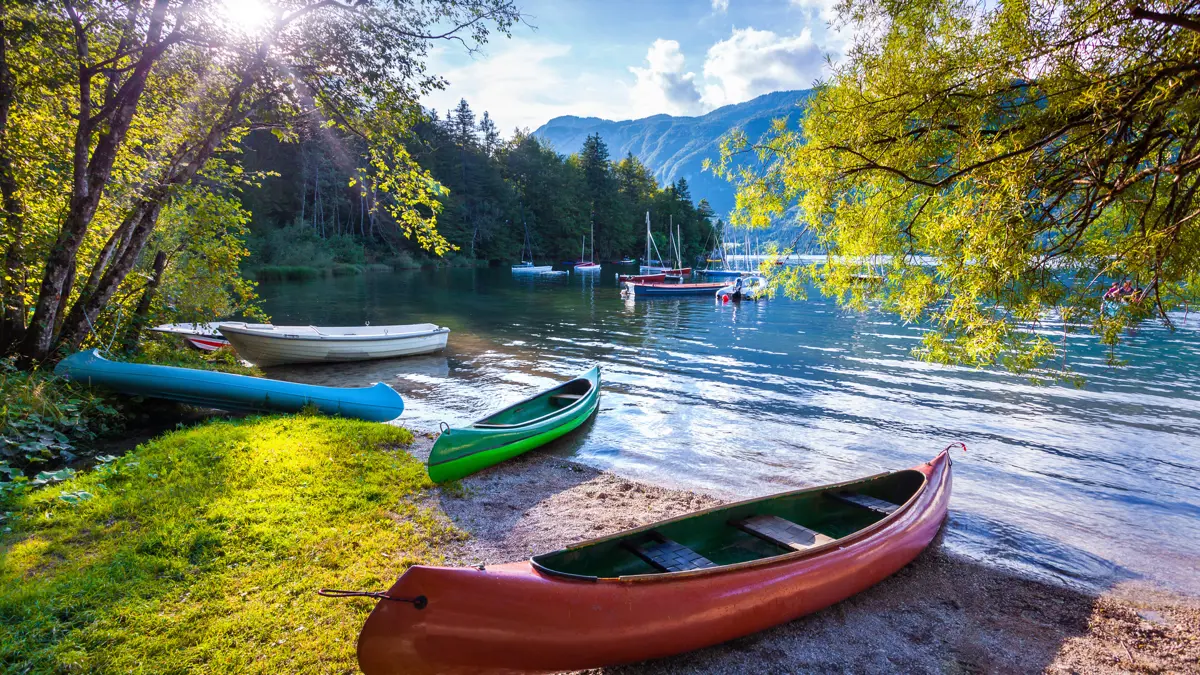
Stillcations: Europe’s “stillest” destinations, ranked
One of the best things about being on holiday is the luxury of allowing yourself to simply “be”. No goals, no packed agenda, nothing in particular to do and nowhere in particular to be.
In a world that never stops, holidays are the antidote. And that “art of doing nothing” is the feeling most of us chase from the moment we book a trip - and it turns out there’s a name for it: stillness.
Stillness, by definition, isn’t about being physically motionless. Rather, stillness is the complete absence of everyday agenda, and instead of focusing on a to-do list of things you’ve got to do next, anchoring yourself in the present moment.
Our team here at Inghams Walking calls a holiday built entirely around this idea a "stillcation". And, it turns out, some destinations are simply better suited to delivering one than others.
Finding your calm and what helps you feel true stillness is slightly different for everyone, but the environment around you plays a bigger role in reaching that state than most people realise.
To help guests experience true stillness when travelling, we’ve crunched the numbers behind nearly 100 destinations across Europe to reveal the places where stillness occurs most naturally.
The science behind the benefits of “stillness”
Our day-to-day worlds have adapted to expect constant optimisation. The expectation that if you’re not moving or improving, or thinking about the next thing, you’re falling behind. But the reality is that it couldn't be further from the truth.
In fact, from a neurological perspective, doing less - or not doing much of anything at all - is one of the most powerful ways to improve how we feel, restore, and show up in our daily lives.
Neuroscience shows that some of our brain’s most important work happens when we’re not actively focused on pursuing goals, but merely existing without an agenda or a set of goals.
Being still in such a way allows your brain to activate what is called the Default Mode Network (DMN) - our brain's natural resting state, which becomes active the moment we stop chasing goals and simply exist. Far from switching off, the brain becomes more active, not less.
According to researchers at the University of British Columbia, this network lights up when we take a moment to pause from the everyday and let our minds wander. During these quieter moments, our brain can better consolidate memories, process emotions, solve problems we didn't know we were working on and build greater self-awareness over time.
But while stillness is a neurological state, it isn't always easy to reach. The right environments will help remove the barriers to stillness that everyday life puts up.
Those environments, according to Eloise Skinner, a UK-based psychotherapist, are most powerfully found in nature.
Eloise explains: “Research suggests being in nature does activate the Default Mode Network, encouraging functional connectivity between cognitive networks.
"This has positive effects on the brain, helping us move into a state of 'rest and digest' rather than 'fight or flight', and reducing our stress response and cognitive fatigue.
“Being surrounded by natural landscapes removes many obstacles and distractions, allowing us to turn our attention inward and feel a sense of greater connection and calm.”
And some destinations in Europe are simply more naturally built for stillness than others…
The top 15 “stillest” destinations in Europe
To determine which were the stillest destinations in Europe, we identified six environmental conditions using the neurological principles of stillness as our framework. Our factors were then chosen based on which are most conducive to activating our brain’s natural resting state:
- Number of walking trails per km²
- Air quality
- Birdsong richness
- Stargazing quality
- Human density per km²
- Total forest cover
We then scored nearly 100 European destinations on these individual factors, and then combined them to create an overall ‘Stillcation Score’, revealing the places in Europe where stillness comes most naturally.
| Rank | Destination | Country | Stillcation Score (/100) |
| 1 | Wester Ross | Scotland | 44.74 |
| 2 | French Pyrenees | France | 41.20 |
| 3 | Abisko | Sweden | 40.86 |
| 4 | Engadin Valley | Switzerland | 39.44 |
| 5 | The Dolomites | Italy | 39.20 |
| 6 | Picos de Europa | Spain | 39.05 |
| 7 | Outer Hebrides | Scotland | 38.96 |
| 8 | Corsica | France | 38.18 |
| 9 | Gotland | Sweden | 37.95 |
| 10 | Kitzbuhel | Austria | 36.86 |
| 11 | Kranjska Gora | Slovenia | 36.38 |
| 12 | St Anton | Austria | 36.32 |
| 13 | Skane | Sweden | 35.05 |
| 14 | Bled | Slovenia | 33.80 |
| 15 | Neustift im Stubaital | Austria | 33.65 |
While each destination in the top 15 offers its own unique path to experiencing true stillness, some are worth pausing on a little longer. From the dramatic peaks of the Italian Dolomites to the remote shores of Scotland's Outer Hebrides, here's what makes a few of them truly special.
The Dolomites, Italy
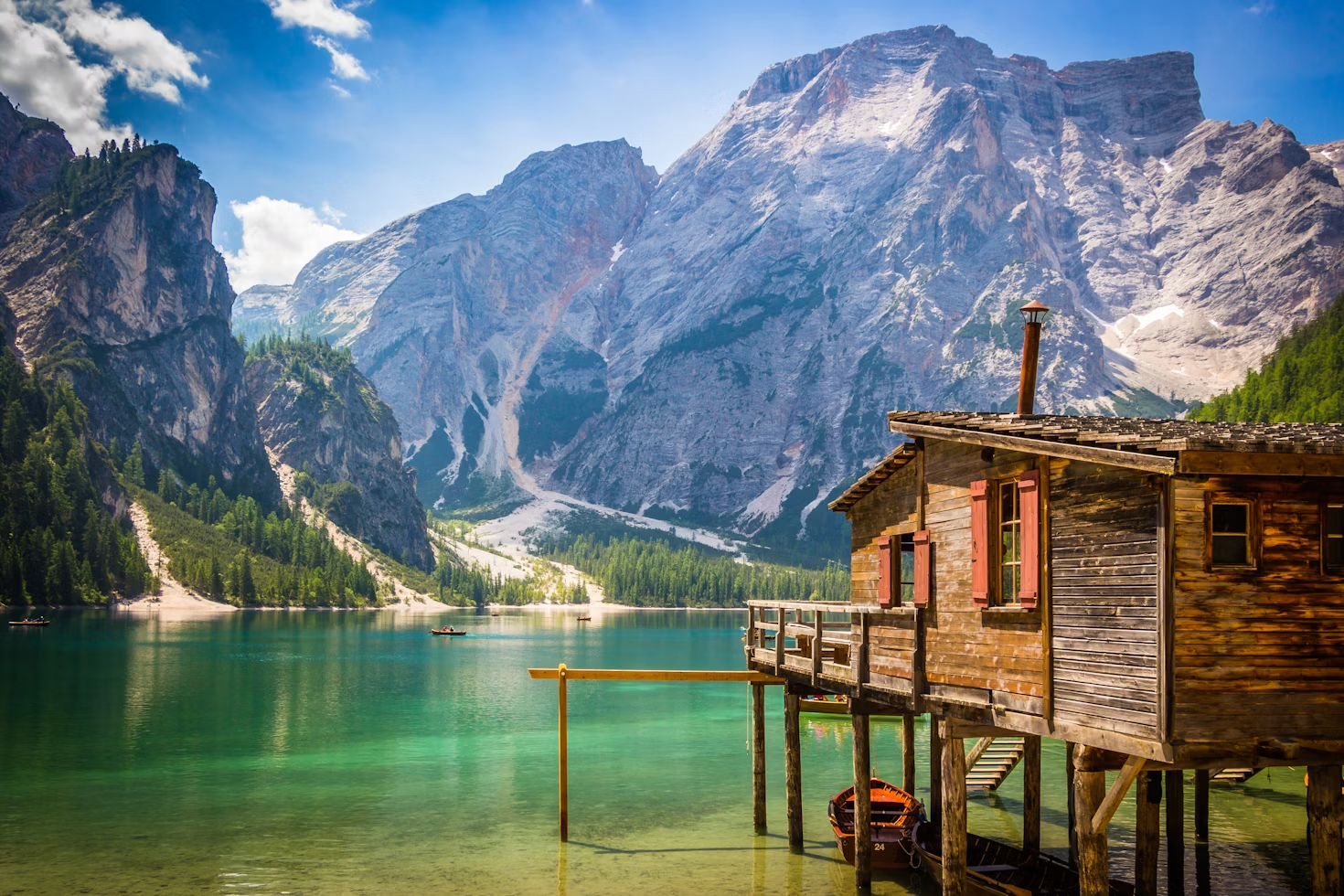
The Dolomites have been having a bit of a “moment” over the past few years, and it's easy to see why.
Located in the northeastern corner of Italy along the border with Austria, this impressive UNESCO World Heritage mountain range offers some of the most incredible mountain scenery in Europe, with a total of 18 peaks stretching over 10,000 feet tall. The jagged limestone peaks and deep valleys will leave even the most distracted mind with nowhere to go but the present moment.
That said, the Dolomites' growing popularity means some areas are more lively than others - especially in peak season. To embrace the true natural stillness that this destination has to offer, head to Alpe di Siusi, where the atmosphere is much more soothing and slow-paced than the popular hub of Cortina.
If you like to mix your stillness with a livelier base, the mountain town of Ortisei has plenty of easy access trails to Alpe de Siusi.
Fittingly, the saying "dolce far niente" is an Italian phrase that means "the sweetness of doing nothing”, so where better to practice it than here?
Engadin Valley, Switzerland
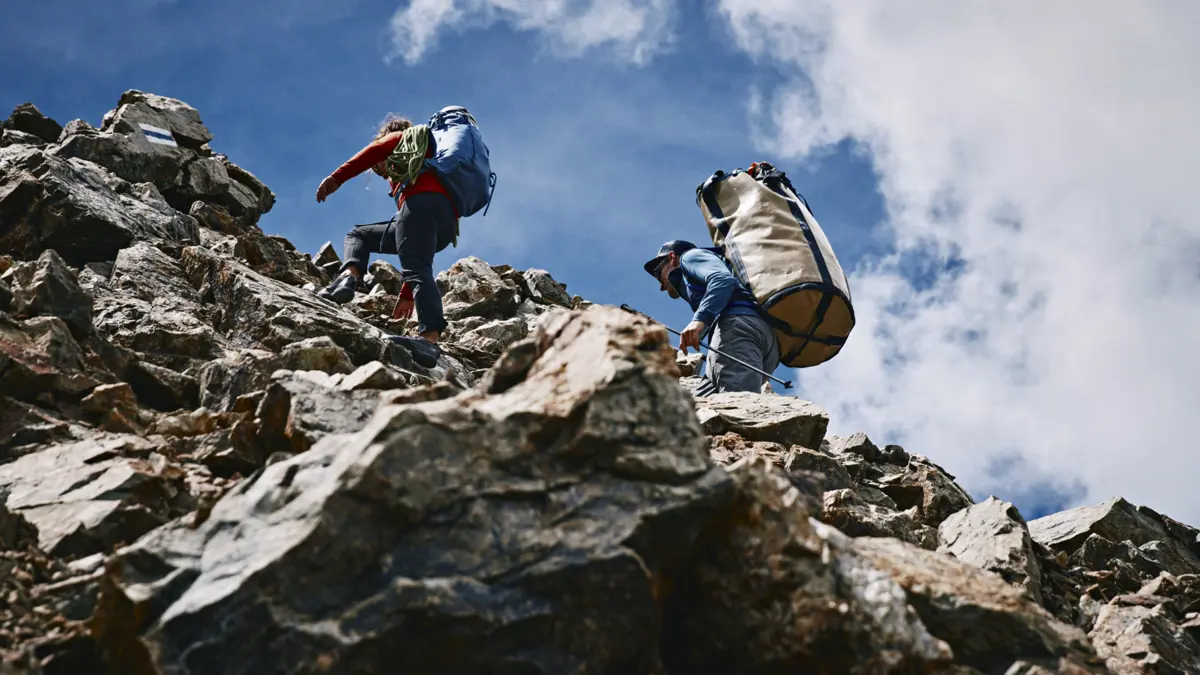
With over 580 km of hiking trails that wind through the surrounding mountains, forests and valleys, it's easy to see why visitors lose themselves in the immersive nature of Switzerland’s Engadin Valley.
From lakeside strolls around Lej da Staz to panoramic ridge walks above the shimmering Engadin lakes, visitors won’t be short of ways to help their minds wander.
The valley had the best air quality score of any destination in our study, and with clean air shown to directly support slow, deliberate breathing, stillness is merely a natural state when visiting here.
St. Moritz is one of the best bases for exploring the Engadin Valley, especially if you’re looking to balance stillness with a bit of luxury and history. In fact, St Moritz is the oldest winter sports resort in the world and its chic hotels and gourmet restaurants attract a stream of both royal and celebrity visitors.
While St Moritz is known for its glitzy winters, it boasts a quieter beauty in the summer, giving you the best of both worlds as the valley reclaims its stillness.
Wester Ross, Scotland
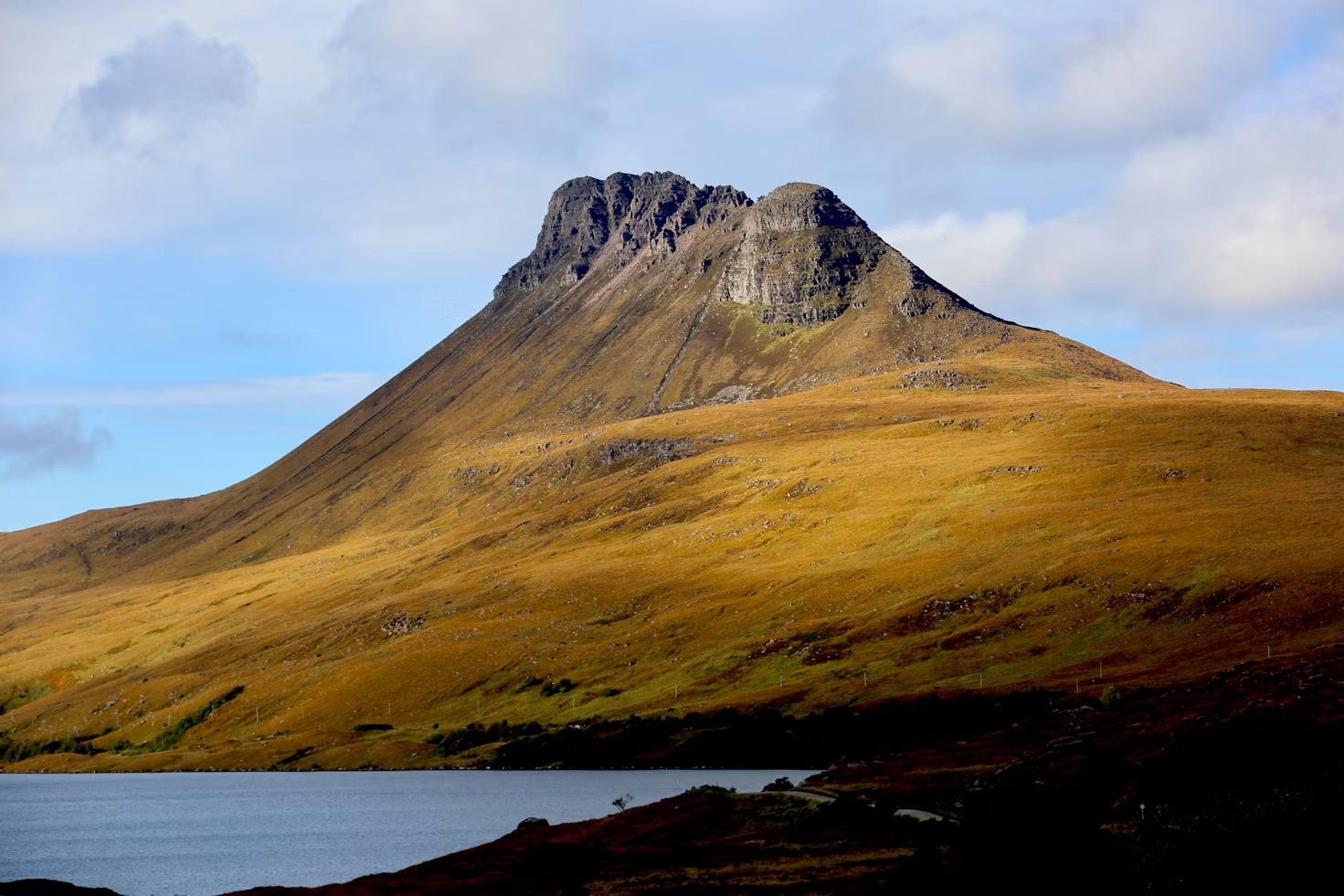
Often described as the “last wilderness of Europe”, Wester Ross was crowned as the stillest destination in Europe in our study.
This spellbinding area in the northwest Highlands of Scotland has an abundance of beautiful beaches, gleaming lochs, centuries-old pinewoods, deep glens and lofty mountains. The diversity in nature here is so rich that it was designated as Scotland's first UNESCO Biosphere Reserve - a protected landscape where nature is left largely undisturbed.
It’s exactly this undisturbed quality that makes Wester Ross Europe’s stillest destination. According to our research, it has some of the darkest skies on the continent. We used the Bortle
Scale (a nine-level numeric scale that measures the night sky's brightness at a particular location) to score the stargazing quality of each destination in our study. Wester Ross scores 1 on this scale, the lowest possible reading, indicating a truly dark sky untouched by light pollution.
And with just 1.6 people per km², Wester Ross is a vast area with a very small population, making it perfect if you're looking to escape the movement of other people.
French Pyrenees, France
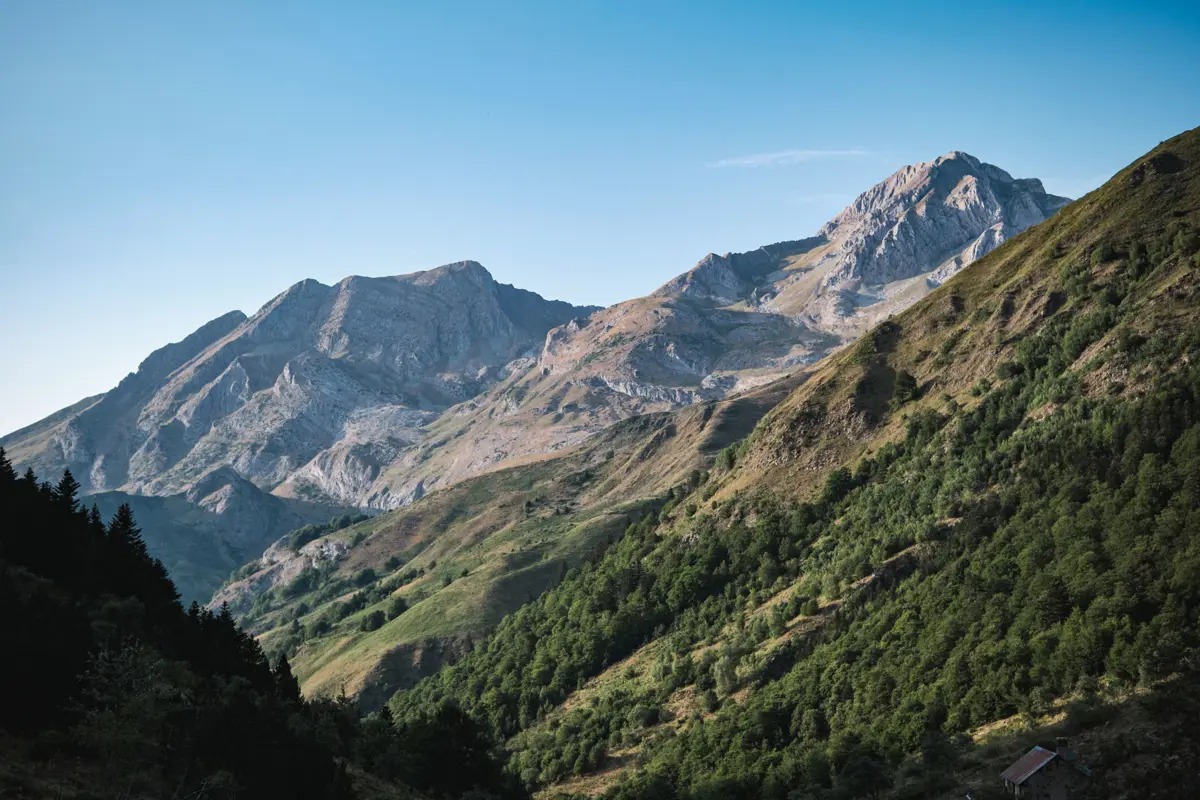
Stretching over 430 km, the French Pyrenees is a vast mountain range in Europe forming the natural border between France and Spain. The terrain is so varied in the Pyrenees that there’s something for every type of holidaymaker - regardless of how they find their stillness.
stillness response. Simply being here will help you drift off into that state of stillness without doing any of the work.
What’s more, with over 319 recorded bird species, the French Pyrenees has one of the richest natural soundscapes of any destination in our study. Research suggests that the sounds of nature help you feel stillness, shifting you from a state of stress caused by everyday life into a more relaxed one with a naturally lower heart rate.
No matter where you go here, the Pyrenees’ landscape is bound to quietly dismantle the barriers between you and stillness.
Abisko, Sweden
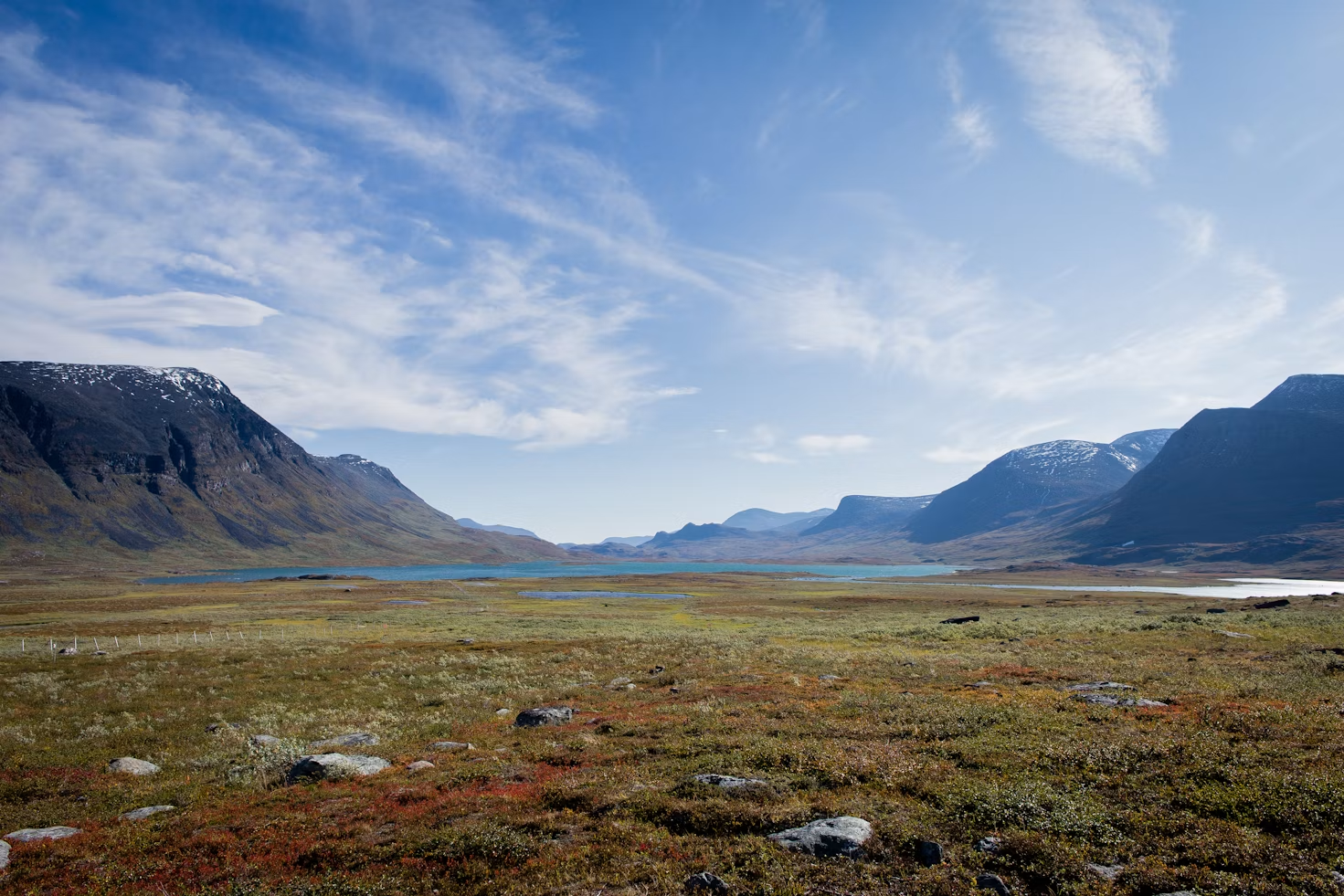
Sitting just 200 km north of the Arctic Circle, the Swedish village of Abisko is renowned as one of the best places in the world to see the Northern Lights.
This is thanks to the positioning of the mountains on both sides of the Abisko National Park, which create a microclimate, shielding most clouds, rain and snow. This creates the “blue hole over Abisko”, where the Northern Lights appear nearly every night during peak season (September to April).
This phenomenon makes this destination an ideal aurora-hunting location - especially if you're looking for an awe-inspiring spectacle that stops any interrupting thoughts in their tracks. Keen to let your mind drift with the night sky? Take a deeper look at our research into the best places for stargazing.
For those looking to spend their days without any specific aurora agendas, and finding stillness through gentle movement, Abisko had the highest walking trail scores of any destination in our study, meaning the paths are already carved, the routes already mapped, and the only thing left to do is walk.
Ready to switch off and explore the very best of what Europe has to offer? Why not also check out our research into the best destinations for an analogue holiday here.
Methodology
To determine the stillest destinations in Europe, our research team analysed data across six equally weighted environmental factors for nearly 100 European destinations.
Each factor was selected based on its direct relevance to the conditions that enable stillness.
- Stargazing quality - measured using the Bortle Scale (1-9) via lightpollutionmap.info. Dark skies signal remoteness and lower human activity.
- Human density - total population divided by area in km², sourced via Wikipedia. High-density environments place an involuntary cognitive load on the brain that prevents true stillness.
- Birdsong richness - total bird species recorded per destination via eBird (Cornell Lab of Ornithology). Birdsong has a peer-reviewed evidence base for stress reduction.
- Forest cover - total forest cover as a percentage of destination area via Global Forest Watch. Dense woodland triggers an involuntary calm response through phytoncides.
- Air quality - measured using Google Maps' air quality index. Clean air directly supports the slow, deliberate breathing stillness requires.
- Walking trail density - total listed trails divided by destination area in km² via AllTrails. Walking in nature measurably reduces cortisol.
Each destination was scored out of 100 across all six factors, and the scores were combined to produce an overall Stillcation Score. All scores are relative to the destinations included in this study.
Find more like this:
Get inspired for your next walking holiday
Insider guides
Sign up now to save £100 on your first Inghams summer holiday
Sign up now